Teeth
Whitening
Thorough, conservative care for every age — with a strong emphasis on prevention, early detection, and treatment plans that retain your natural teeth whenever possible.
What to expect.
As a private dental practice always looking to deliver the highest quality of care in a relaxed and calm environment, you can trust that we will work hard to look after your oral health in a way that makes you comfortable, confident and leaves you smiling.
With more than sixty years of combined experience, our team has the skills required to effectively treat patients of all ages, and we practice a minimally invasive approach — treatment plans aim to retain your natural teeth whenever possible.
Suited to
Patients of all ages looking for thorough, conservative care in a calm environment.
Good to know
Ground-floor practice with step-free access, good street parking, tube 10 min away, and bus 240 at the door.
A calm,
considered visit.
Why is stain removal important?
- Improves appearance of your teeth and confidence
- Supports overall gum health
- Ideal preparatory step before teeth whitening
- Safer, professional alternative to at home alternatives
What causes tooth staining?
The most common causes of surface staining are tea, coffee, red wine, and smoking. These deposit pigments on the outer enamel layer over time. Certain foods, such as berries, curries, and tomato-based sauces, can also contribute. Some medications (such as tetracycline antibiotics taken in childhood) can cause deeper, intrinsic staining within the tooth structure itself, which is more difficult to treat.
How do you remove stains from teeth?
Surface staining can often be significantly reduced or removed through a professional hygienist appointment, using specialist instruments and a polishing paste. For more stubborn staining – particularly from heavy tea, coffee, or tobacco use – we may use an air polishing device (a fine jet of water, air, and powder) which is highly effective at removing deep surface discolouration without damaging the enamel.
Is stain removal the same as teeth whitening?
No – they are different treatments. Stain removal restores your teeth closer to their natural shade by removing surface deposits. Professional teeth whitening uses a peroxide-based gel to actively lighten the natural colour of the tooth enamel, achieving a brighter result than stain removal alone. Many patients find that a hygienist clean before whitening gives them the best possible outcome.
Will stain removal damage my enamel?
Professional stain removal carried out by a trained hygienist or dentist is safe and does not damage enamel. We use appropriate polishing pastes and instruments matched to your teeth. Over-the-counter abrasive whitening toothpastes used excessively can cause enamel wear over time – professional treatment is the safer alternative for maintaining a clean, bright appearance.
Why is teeth whitening important?
- Produces immediate and noticeable improvements to your teeth and confidence
- Whitening is a gateway to broader aesthetic oral treatment
- Professional whitening is far safer and more effective than OTC treatments.
What teeth whitening options do you offer?
We offer professional home whitening using custom-made trays and prescription-strength whitening gel. Professional whitening is safe, effective, and provides a more reliable and longer-lasting outcome than OTC products. Teeth whitening must be prescribed and supplied by a GDC-registered dental professional.
Is teeth whitening safe?
Professional teeth whitening carried out under the supervision of a dentist is safe. The whitening gel lightens the enamel through an oxidation process and does not damage the tooth structure when used correctly. Some patients experience temporary sensitivity during or after treatment, which settles within a few days. We assess your teeth and gums before whitening to ensure it is appropriate for you.
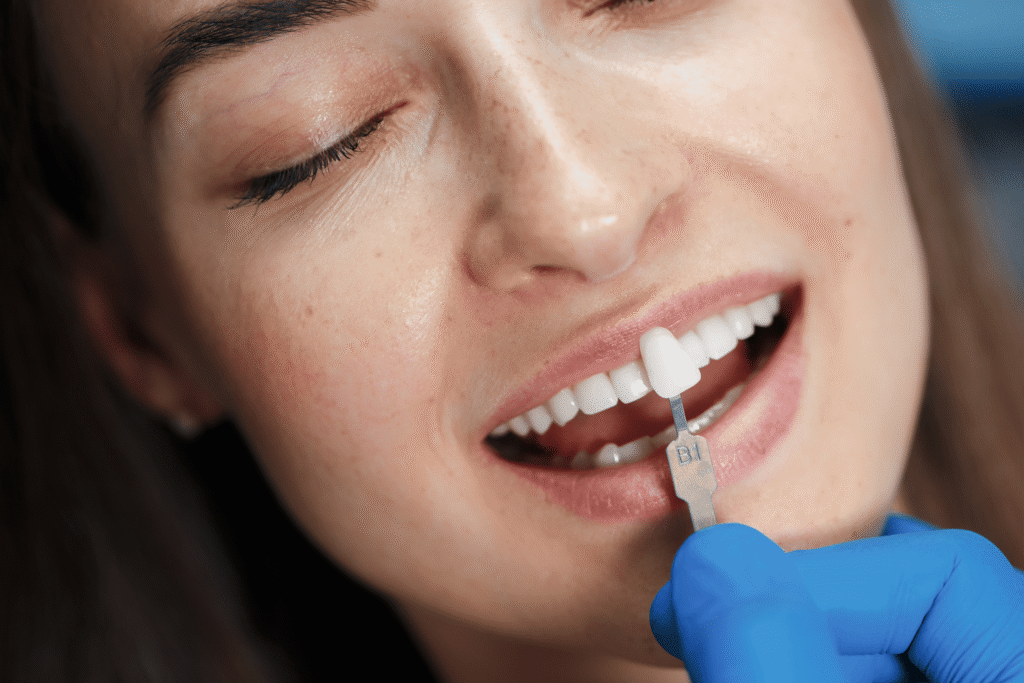
How white will my teeth get?
Results vary depending on your natural tooth shade, the type of staining present, and how you respond to the whitening agent. Most patients achieve a noticeable improvement of several shades. Whitening works on natural tooth enamel and will not change the colour of crowns, veneers, or composite fillings – these may need to be replaced to match your new shade. Dentures are usually not affected by normal tooth whitening.
How long do whitening results last?
With good oral hygiene and avoiding heavy consumption of staining foods and drinks (coffee, tea, red wine), whitening results typically last one to three years. Top-up treatments with your custom trays can extend and maintain your results over time. Using your trays periodically with a small amount of whitening gel is the most cost-effective way to keep your smile bright.
Can I use whitening toothpaste instead of professional whitening?
Whitening toothpastes primarily work by removing surface staining through mild abrasion – they do not change the intrinsic shade of the tooth enamel. The results are therefore more limited than professional treatment. Some abrasive whitening toothpastes used excessively can also cause enamel wear. Professional whitening is the only way to genuinely lighten the natural colour of your teeth. However, some modern whitening toothpastes can help to maintain your new shade for longer.
A warm welcome
is waiting.
Call us on 020 8346 7747 or send an enquiry — a member of our reception team will be in touch as soon as they can.
Enquire about a consultation →